Interior Cleaner or Interior Dressing: What’s the Difference?
A dusty dashboard and a sticky door handle do not need the same answer as clean trim that looks a little tired. Interior cleaner removes dirt. Interior dressing is a separate finishing step for suitable surfaces. Getting that distinction right saves wasted effort and helps you avoid spreading residue around the cabin.
The useful order is simple: remove loose debris, clean what needs cleaning, then decide whether any trim needs dressing. That applies to a family car, a working van or a truck cab. You do not have to dress the interior every time you clean it.

Original illustration of the workflow, not a measured before and after product result.
Cleaner lifts the grime you want gone
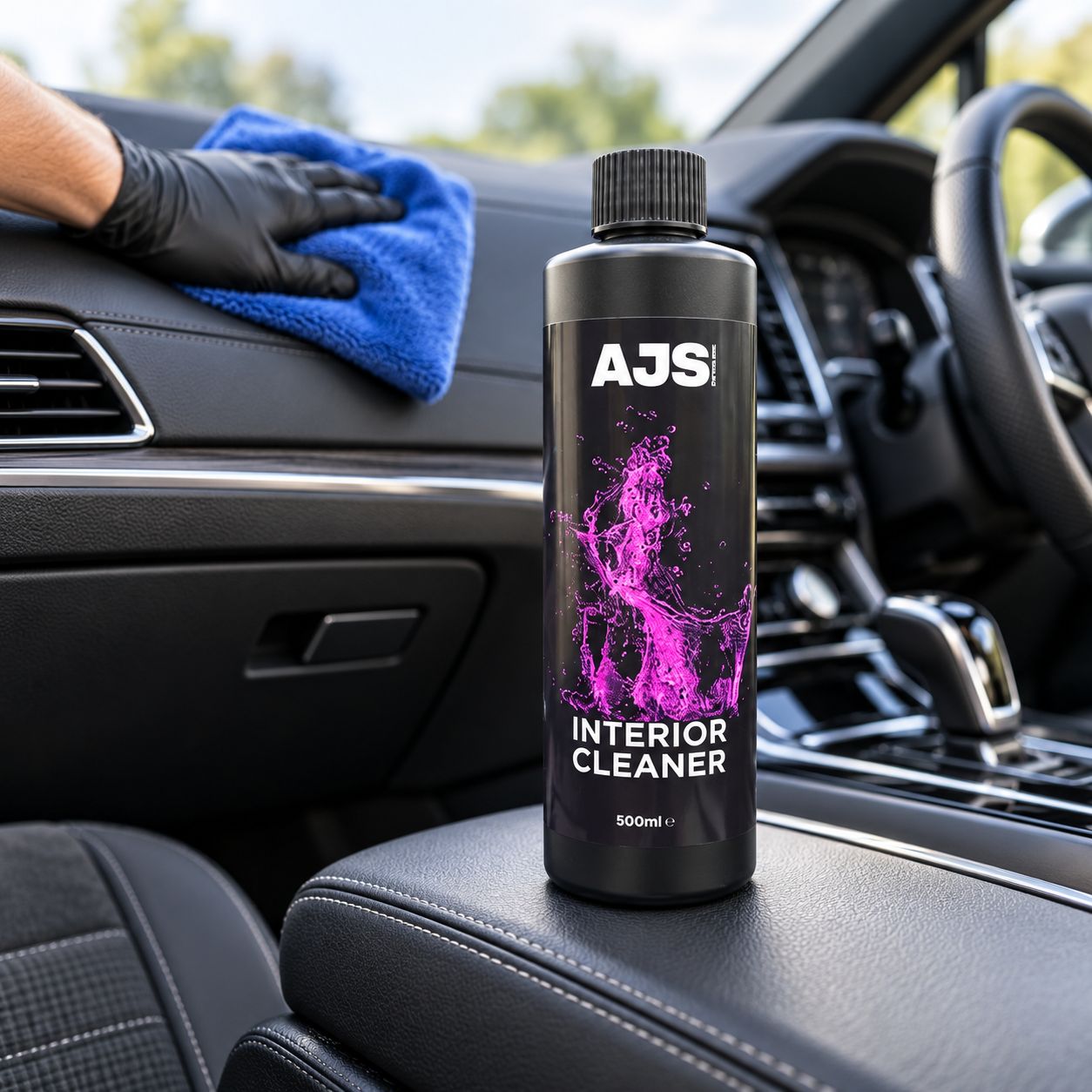
Think fingerprints around handles, everyday grime on door cards and dirt carried into the cab. AJS Interior Cleaner is a water based cleaner described for suitable upholstery, plastics, vinyl, leatherette and interior trim. Its job is cleaning, leaving a finish without greasy residue, rather than adding a decorative sheen.
The listed method is to spray lightly onto the surface or an interior cleaning pad or microfibre cloth, gently agitate stubborn dirt with a soft brush or sponge, then wipe away residue with a clean microfibre towel. Check the label and test a hidden area first. Do not assume that suitability for leatherette also means suitability for natural leather or suede.
For awkward areas, putting cleaner on the cloth gives more control than spraying towards switches and vents. Keep moisture away from electrical openings and never soak upholstery. Follow the vehicle maker’s guidance for delicate finishes, screens and coated surfaces.
View AJS Interior Cleaner and its application guidance
Dressing finishes trim that is already clean
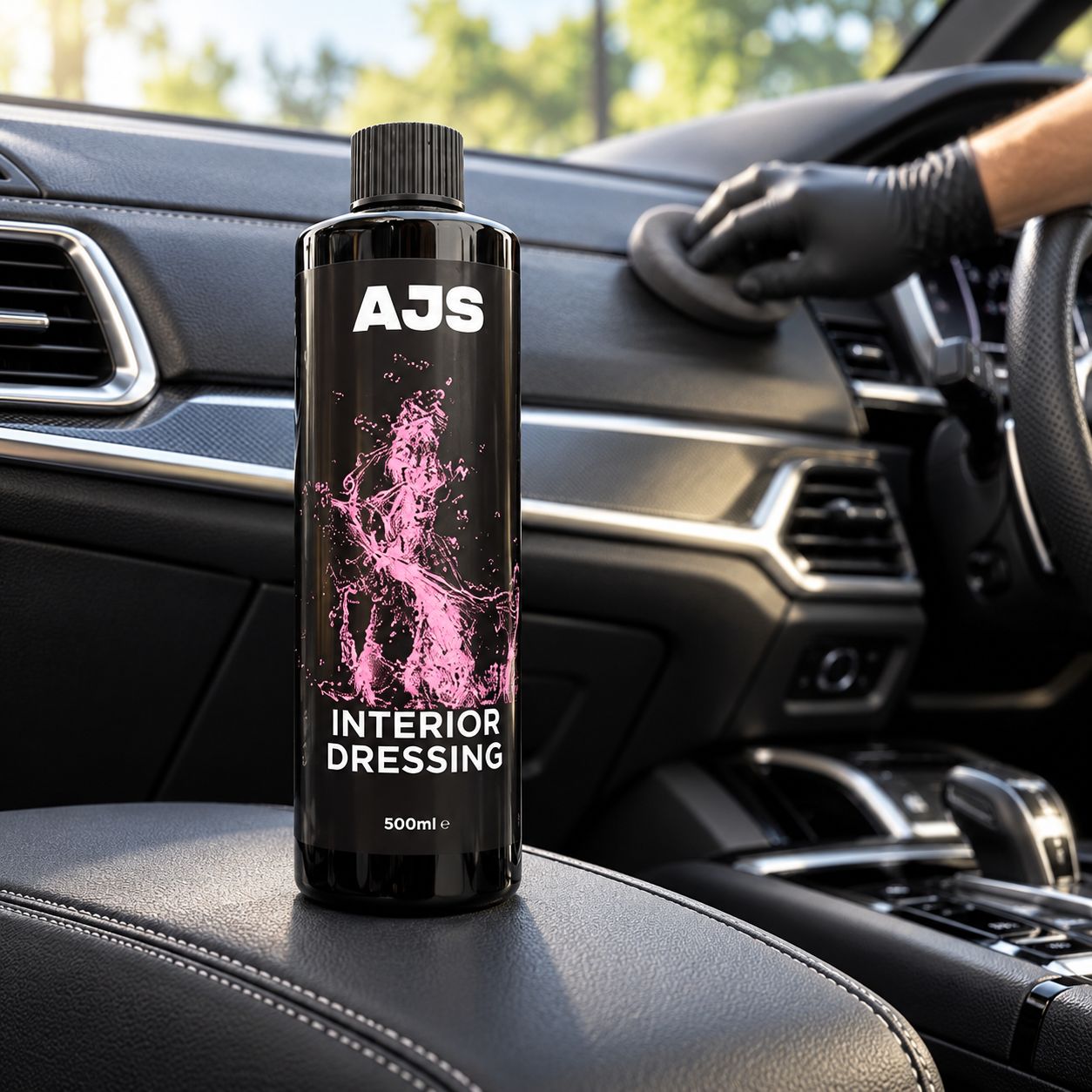
AJS Interior Dressing is listed for suitable cabin plastics and trim, including dashboards and door cards. The description calls it AJS Satin Interior Detailer and specifies a water based formula with a satin finish without oily residue. That is a finishing role, not an alternative way to remove greasy fingerprints.
The website also lists antistatic properties to help reduce dust build up and UV protection as described in the product guidance. These are the retailer’s stated benefits, not a reason to skip cleaning or expect a permanently dust free cabin.
Lightly spray onto an interior microfibre pad or towel, wipe evenly over suitable trim, then use a dry side to remove excess. Check the label for surface suitability. A controlled, even application is more useful than adding extra product in pursuit of shine.
View AJS Interior Dressing and its application guidance
Which gives the better result?

The better choice depends on the job. For dirt removal, cleaner has the relevant purpose; dressing cannot replace it. For a satin finish on suitable, clean trim, dressing offers a benefit that cleaning alone is not designed to provide. Neither product wins every task.
If a panel still feels sticky after cleaning, inspect it and remove remaining residue rather than covering it with dressing. If the clean finish already suits you, stop there. Avoid repeatedly layering product without checking what the surface actually needs.
A practical cabin routine
- Park safely and remove rubbish and loose mats. Vacuum grit from seats, carpets and crevices before wiping it across trim.
- Check surface instructions and test a hidden area. Separate cloths for dirty cleaning and final finishing help prevent contamination.
- Clean suitable surfaces in manageable areas. Turn the cloth frequently and change it when dirty. Remove residue before judging the result.
- Let cleaned areas dry. Apply dressing only where the label and vehicle guidance allow, removing excess with a dry towel.
- Refit dry mats securely. Check the driving position, visibility and controls before setting off.
Keep grip and visibility out of the finishing routine
Never apply slippery dressing to pedals, the steering wheel, gear selector or other grip and control surfaces. Keep it off floor mats, glass and screens. Even a product described as leaving no oily residue is not permission to dress those areas.
Avoid a reflective dashboard finish that creates distracting windscreen glare. Keep applications light and remove excess. Seat materials, specialist coatings and damaged trim need their own suitability checks rather than a blanket interior treatment.
The takeaway: clean to remove dirt, dress only to finish suitable trim, and leave every driving surface safe to use.