This is a subtitle for your new post

Why do tyres turn brown? A practical guide to cleaner sidewalls
Brown marks do not always mean you have washed your car badly. Here is how to understand the residue, clean sensibly and avoid covering the problem with more shine.
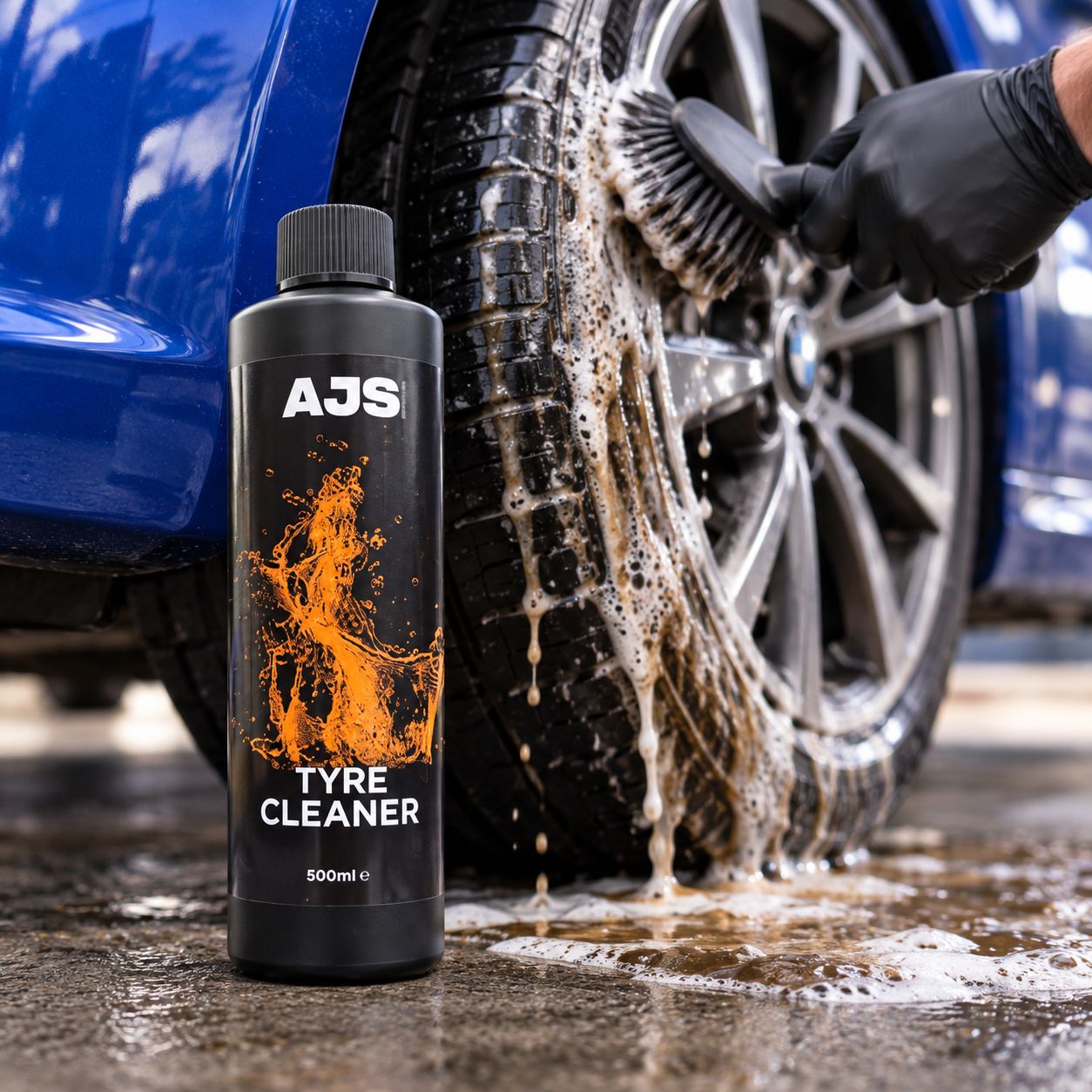
AJS Tyre Cleaner website product image. Follow the bottle label for the actual application method.
You have washed the bodywork, rinsed the wheels and stepped back to admire the result. Then you notice it: a brown haze around the tyres. It can make an otherwise clean car look unfinished.
For drivers in Harrogate looking to improve their car washing routine, the answer is not necessarily a stronger cleaner or another layer of dressing. Start by understanding what you are cleaning, then choose a method that suits the tyre and the product.
What causes the brown colour?
Road dirt and residue from previous dressings can contribute to a dull or dirty sidewall. Another possible cause is tyre blooming. Protective additives in the rubber can migrate towards the surface and react with the air, leaving a brown film.
That means brown colouring is not always simply mud, and it is not automatically a sign that a tyre is worn out. Equally, colour alone cannot tell you whether a tyre is safe.
Appearance is not a safety check. If you notice cracks, a bulge, cuts, exposed cords or unexplained pressure loss, ask a tyre professional to inspect it. Cleaning or dressing cannot repair tyre damage.
Why can tyres still look dirty after a car wash?
A quick pass with your bodywork shampoo may remove loose dirt without fully addressing residue on the sidewall. Raised lettering and textured rubber also need attention that a brief rinse can miss.
Do not assume every wheel cleaner is suitable for tyres, or that every tyre cleaner is suitable for the wheel finish beside it. Check both the product label and the vehicle or wheel care guidance before starting.
A calmer, safer tyre cleaning routine
1. Start with cool surfaces
Work out of direct sun where practical, with cool tyres and wheels. Gather a suitable tyre brush, water and the cleaner. Keep the tyre brush separate from tools used on paintwork.
2. Let the label set the method
Follow the cleaner's instructions for application, dilution if required, contact time, agitation and rinsing. Wear any protective equipment it specifies. There is no universal dilution or waiting time that suits every product, and stronger is not automatically better.
3. Clean carefully, not aggressively
Use a brush intended for tyre rubber where the instructions call for one. Avoid wire brushes and abrasive pads. Protect nearby finishes from unsuitable chemicals, and do not let a cleaner dry on the surface unless its instructions expressly allow it.
4. Check the dry result
Complete the removal and rinsing steps specified on the label, then inspect the tyre once dry. Wet rubber can look darker and disguise remaining marks. If residue persists, follow the label's repeat cleaning guidance rather than repeatedly scrubbing to chase perfectly clear foam.
Where does AJS Tyre Cleaner fit?
AJS Tyre Cleaner is the cleaning stage of the routine. It is a separate product from Tyre Dressing, which is used afterwards to enhance the finish.
The online listing directs you to the supplied label for surface suitability and application instructions. Read that before use rather than treating a general blog guide as a substitute. No particular dilution, contact time or permanent cure for browning is promised here.
Read the AJS Tyre Cleaner product details
Do you need dressing afterwards?
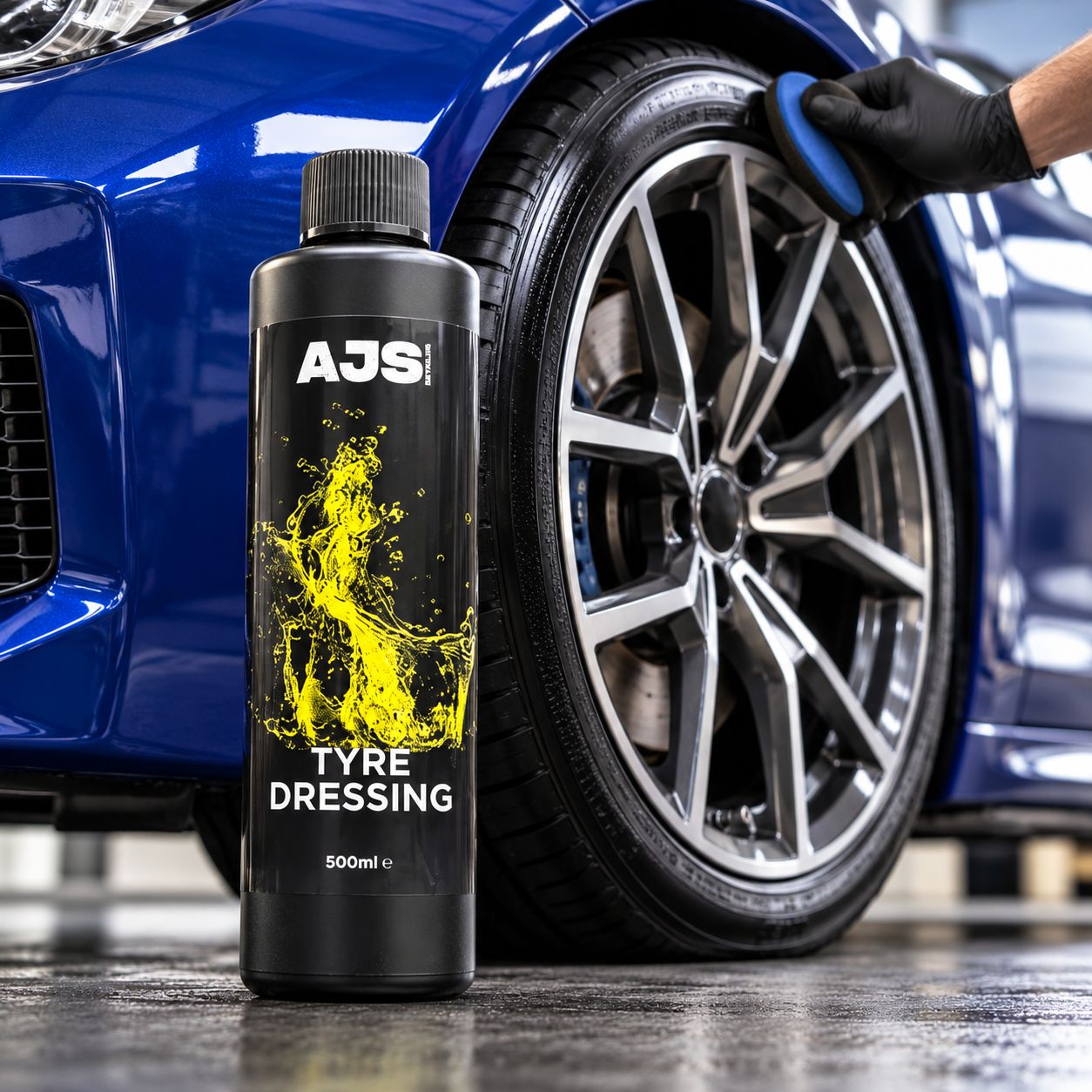
Tyre Dressing is an optional finishing step, not a replacement for cleaning.
No. A clean tyre does not have to look glossy. Dressing is an appearance choice, not a tyre repair or a reason to skip cleaning.
If you choose AJS Tyre Dressing, the current instructions say to start with clean, completely dry tyres, apply with a tyre dressing applicator sponge and spread evenly over the sidewall. One coat gives a satin sheen, while extra layers build gloss. Allow it to cure before driving, following the label. The applicator is sold separately.
Apply dressing to sidewalls only. Keep it away from the tread, braking surfaces and controls.
Read the AJS Tyre Dressing instructions · Explore the complete cleaning and dressing guide
Will the brown film come back?
It can. Road use adds fresh contamination, and blooming can recur because it relates to the rubber itself. A recurring brown tint does not automatically mean your cleaning failed.
A sensible routine is more useful than chasing a permanent cosmetic fix: check tyre condition regularly, clean with a suitable method and judge the result when dry. The aim is clean, cared for tyres, not an endless cycle of stronger chemicals and extra shine.