This is a subtitle for your new post

Faded plastic trim? A practical guide to a deeper, more even finish
Freshly washed paintwork can make dull exterior trim stand out even more. A grey bumper corner, tired mirror housing or patchy scuttle can leave a car, van or truck looking unfinished, even when the rest of it is spotless.
The answer is not simply to add more product. Clean preparation, the right treatment for the material and a light, even application matter far more. Here is how to approach exterior trim care without turning it into a complicated job.
Is the trim dirty, faded or damaged?
Start by washing the area and inspecting it once dry. Road film, old product residue and dirt caught in textured plastic can disguise the underlying finish. A dressing should not be used to cover up a surface that still needs cleaning.
If the plastic remains pale after cleaning, a suitable trim treatment may improve its appearance. However, scratches, cracks, peeling coatings and physical damage are different problems. Improving colour depth is not the same as repairing the material, and results will depend on its condition.
Check what you are working on, too. Textured exterior plastic, painted trim, glossy decorative panels and rubber mouldings are not interchangeable. Follow the vehicle care guidance and the product label rather than assuming one bottle suits every surface.
Where AJS Trim Detailer fits
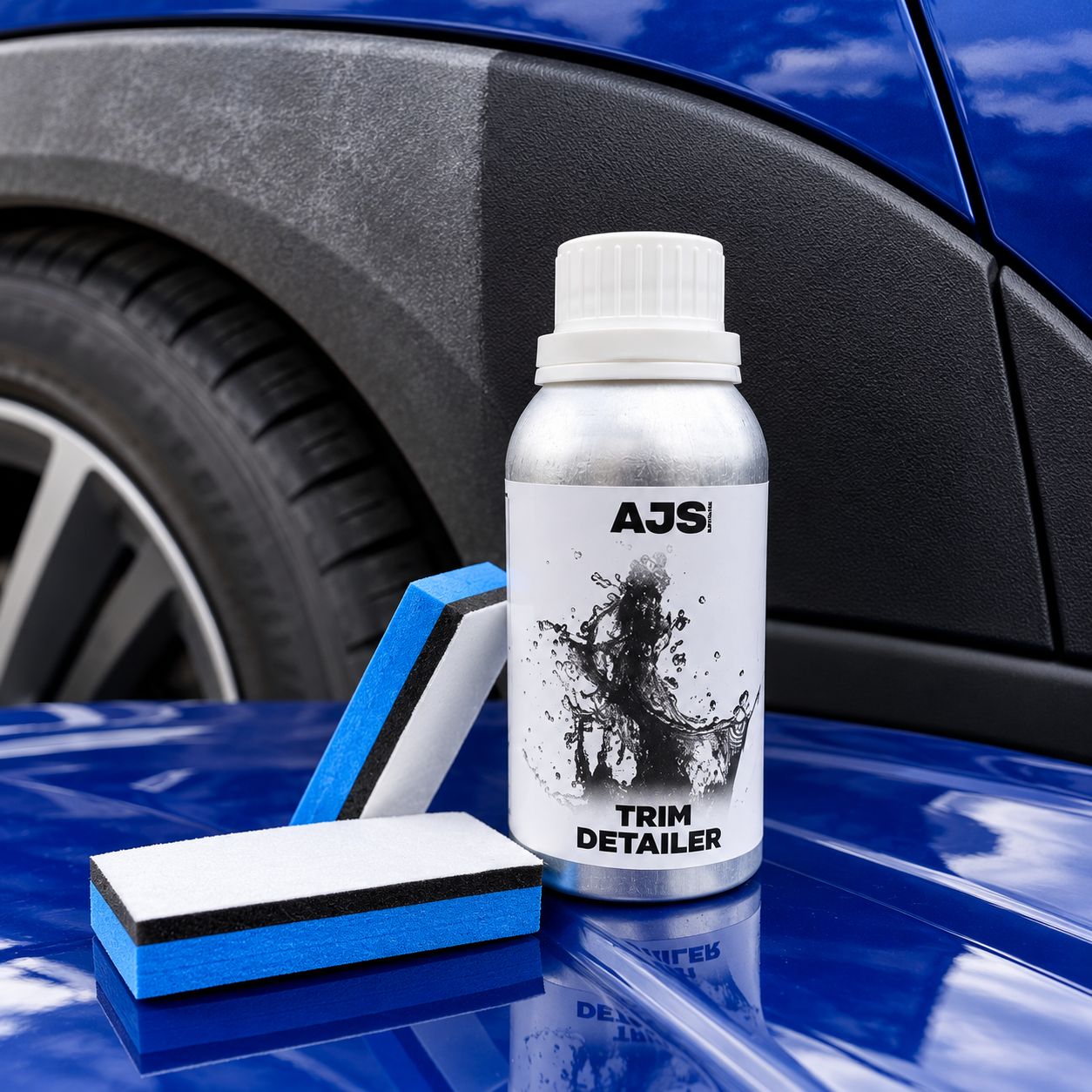
AJS Ultimate Trim Detailer is intended to refresh faded exterior plastic and rubber trim. The current product guidance describes nano ceramic technology to enhance colour depth and provide a hydrophobic finish, meaning water tends to bead on the treated surface.
Its listed uses include suitable exterior bumpers, mirror housings, trim panels, scuttles and rubber mouldings, subject to the label. It comes in a 200ml bottle. This is an exterior trim treatment, not a substitute for an interior cleaner or a repair for damaged plastic.
View AJS Ultimate Trim Detailer
A simple application routine
1. Clean thoroughly, then dry
Use a cleaner suitable for the material and remove dirt and residue before treatment. Follow the cleaner instructions and make sure the trim is thoroughly dry. Pay attention to textured recesses, seams and places where water can linger.
2. Test a discreet area
Check the product label and try a small, hidden section first. Inspect the finish before continuing, especially on unfamiliar materials or trim that has already been treated with another product.
3. Use a small amount
The AJS instructions specify applying a small amount to a foam or microfibre applicator pad. Spread it evenly with smooth passes. Work carefully around neighbouring paintwork and glass, using a controlled application rather than flooding the area.
4. Follow the bonding and curing instructions
Allow the product to bond and cure as directed, then remove excess with a clean microfibre towel. The website does not specify an exact curing time, so use the supplied label for timing and any restrictions on water exposure. Do not assume the surface is ready immediately.
Mistakes that can leave a patchy finish
Applying treatment over dirt is a common shortcut worth avoiding. So is using too much product, leaving excess in textured areas or missing the final wipe. A thin, consistent application is easier to control than a heavy coat.
Keep applicators and towels clean. If a cloth has picked up grit or polish residue from another task, choose a fresh one. Do not use exterior trim treatment on pedals, steering wheel grips, tyre tread or other surfaces where grip matters.
Avoid improvised heat treatments or household mixtures. A product intended for the surface, used according to its label, is a more sensible starting point than experimenting on a visible panel.
Keeping the finish looking tidy
For drivers in Harrogate or elsewhere, the routine starts with the same basics: suitable cleaning, careful drying and checking the trim before applying anything. Assess the finish after regular washes and follow the product guidance when further treatment is needed.
There is no fixed lifespan promised here. Weather, washing, surface condition and application can all affect the result. The aim is a cleaner, more even appearance on suitable trim, not a permanent cure for every faded panel.
A little preparation can make the difference between a rushed shiny patch and a tidy finish that complements the rest of your vehicle.