Why does clean glass still look smeary? Learn how to spot residue, choose the right cleaning step and avoid common mistakes with vehicle windows.
Clear glass, less guesswork: a practical guide to cleaning car windows
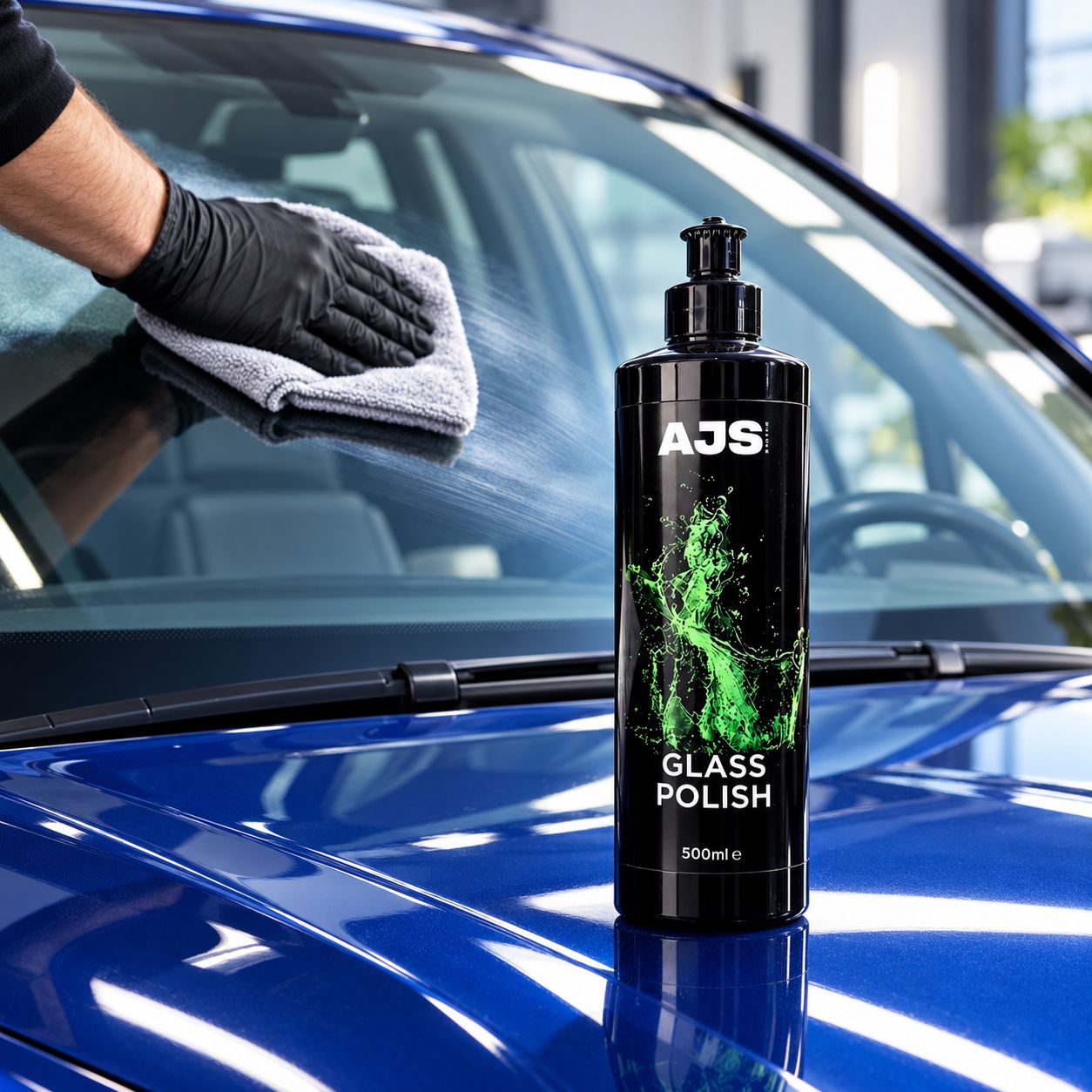
You clean the windscreen, step back and everything looks fine. Then the light catches it and a fresh set of smears appears. Sound familiar?
Glass cleaning can feel like one of the most frustrating parts of looking after a vehicle. Often, the answer is not more product or harder scrubbing. It is understanding what is on the glass, using clean cloths and knowing when ordinary cleaning needs a different approach.
Whether you are driving around Harrogate or preparing your car, van or truck for its next journey, the aim is the same: clear glass without unnecessary effort.
Why does glass still look dirty after cleaning?
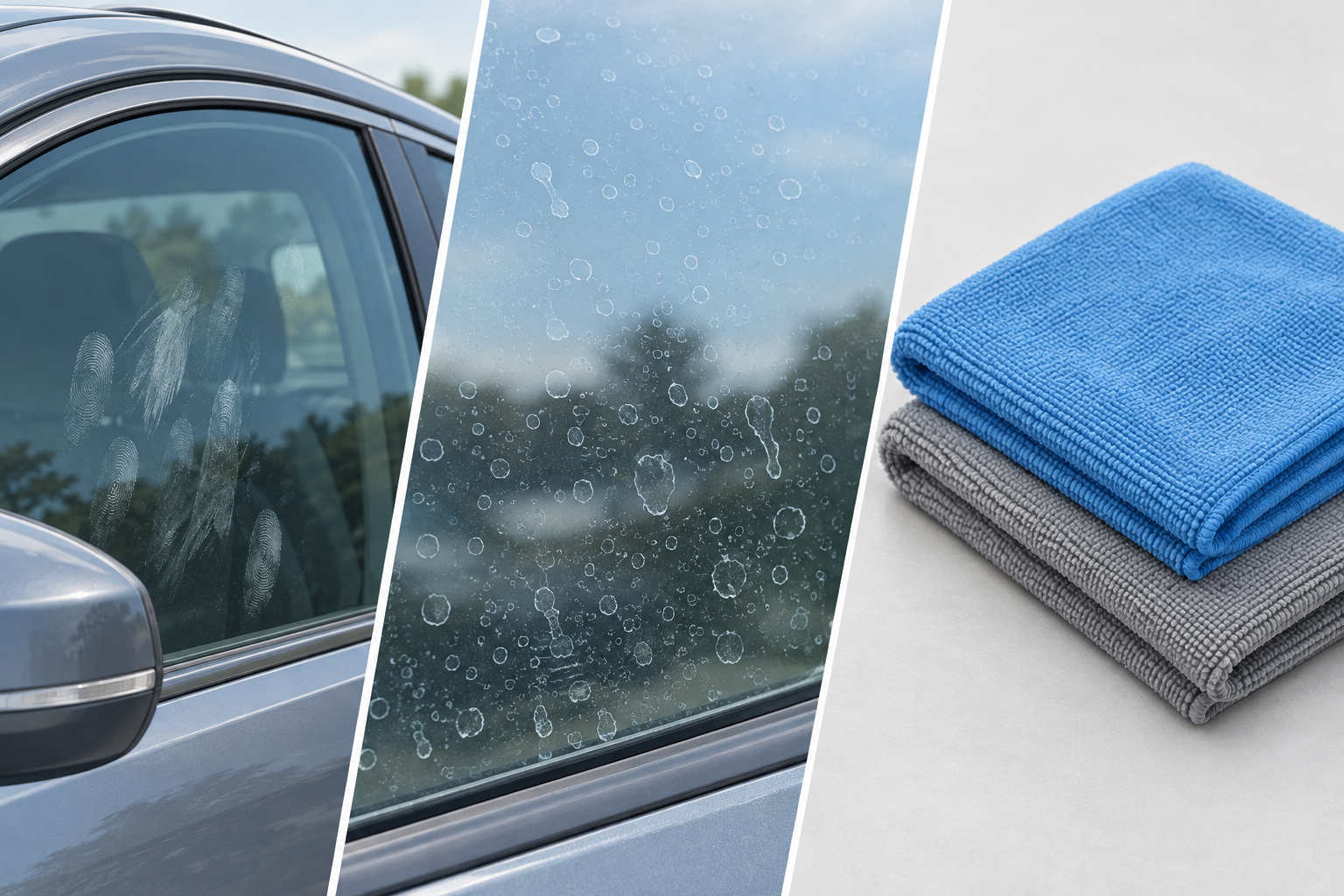
Illustration: common marks and the importance of clean cloths. Not a product performance demonstration.
The inside and outside of a window face different problems. Outside, road grime, insects and dried water deposits can leave marks. Inside, fingerprints and a greasy film can build up, even when the rest of the cabin looks tidy.
A cloth carrying dashboard dressing or old cleaning residue can spread that film rather than remove it. Keep your glass cloths separate from those used for paintwork, interior dressings and tyres. Change to a clean side frequently, and use a fresh dry cloth for the final finish.
Is glass cleaner the same as glass polish?
Not quite. Routine glass cleaning deals with everyday dirt and fingerprints. A glass polish is a different step, intended to tackle more persistent surface film and deposits.
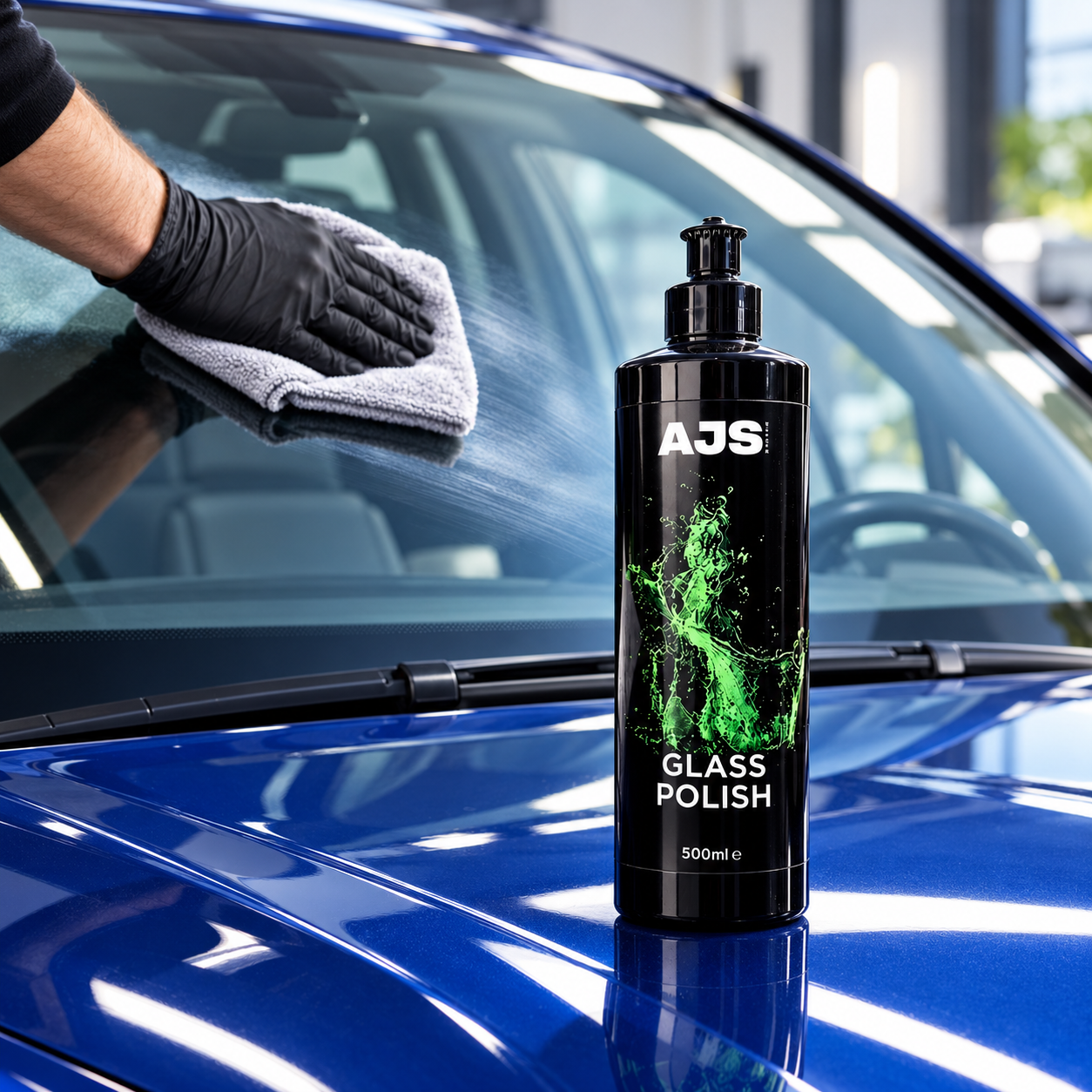
Where AJS Glass Polish fits into the routine
The product on our website is called AJS Glass Polish. Its listed uses include tackling hazy film, road grime and water marks on vehicle windscreens, windows and mirrors. It can also prepare suitable glass before a compatible sealant or rain repellent treatment.
That does not mean every window needs polishing every time you wash the vehicle. Start with normal cleaning, inspect the result and use the extra step when the remaining surface contamination calls for it.
Read the AJS Glass Polish instructions and product details
“What if I leave streaks or make it worse?”
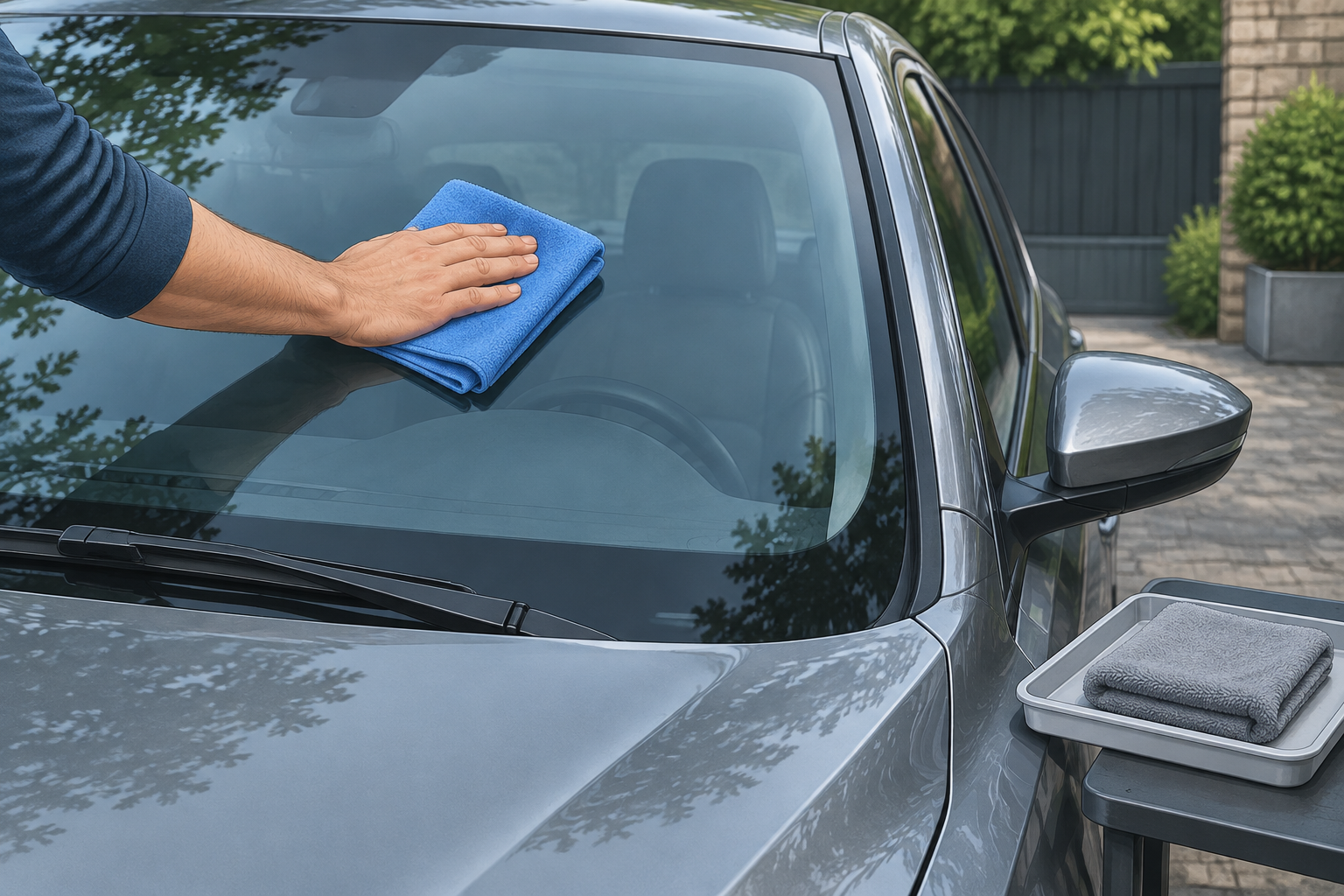
Illustration: keep a separate clean cloth ready for the final finish. Follow the product label for application.
Work on glass that is cool to the touch, away from direct sun. Warm glass can make products dry too quickly, leaving residue before you have finished wiping.
Use the amount directed by the product instructions rather than assuming more will work better. With AJS Glass Polish, the website specifies a small amount on a microfibre applicator or foam polishing pad. A clean, dry cloth is then used to remove the residue.
If smears remain, stop and check your cloth before adding more product. A damp or contaminated finishing cloth may be the problem. Inspect the glass from different angles while the vehicle is parked safely.
A simple method for using AJS Glass Polish
- Clean the glass first, then make sure it is dry and cool to the touch. Do not polish loose grit across the surface.
- Apply a small amount to a clean microfibre applicator or foam polishing pad.
- Work it into the glass with overlapping circular motions, as described in the product guidance.
- Buff away the residue with a clean, dry microfibre cloth.
- Inspect the finish. Repeat on stubborn marks if required, following the supplied label.
Check the label before starting. It takes priority over general advice, especially where glass has an existing treatment or coating.
“Can I use it on tinted or coated windows?”
Do not assume that a product suitable for ordinary vehicle glass is automatically suitable for tint film or every specialist coating.
The AJS product page tells users to check suitability for coated or treated glass. If your windows have aftermarket tint film, follow the film supplier’s care instructions and confirm compatibility before applying a polish. If you are unsure, ask rather than experiment.
“Will it remove scratches or stop the windows misting up?”
These are different problems. The product listing describes surface film, grime and water marks; it does not promise scratch repair or an anti fog treatment.
Cleaning can remove contamination that affects visibility, but it cannot be relied on to repair chips, cracks or scratched glass. Persistent damage needs advice from a glass specialist. Misting also requires attention to moisture and ventilation, not just another application of polish.
“Why do the marks keep coming back?”
Dried droplets can leave deposits, while a dirty finishing cloth can put residue straight back onto the surface. Dry the glass after washing rather than leaving droplets to evaporate, and keep a fresh cloth ready for the final check.
If the same marks remain after careful cleaning and the correct polishing method, do not keep increasing pressure. They may need a different treatment or specialist assessment.
The clear view checklist
Cool glass. Clean cloths. The right product for the surface. A final inspection from more than one angle.
Those small habits make glass care less frustrating. You do not need an elaborate routine, just a method that deals with the actual problem rather than chasing every smear with more product.
If you are unsure whether the marks on your glass are ordinary dirt, persistent film or something else, tell us what you are seeing and whether the glass is tinted or treated. We can help you understand the listed product guidance without guessing about compatibility.